
OHS Act South Africa: A Practical Guide to the Occupational Health and Safety Act 85 of 1993
The Occupational Health and Safety Act 85 of 1993 makes the employer responsible for a working environment that is safe and without risk to health, so far as is reasonably practicable. The Occupational Health and Safety Act of South Africa sets the general duties; the regulations made under it carry the technical detail.
This is why South African safety compliance always has two layers. The Act tells you that you must; the regulations, and the SANS standards they reference, tell you how. An employer who reads only the Act won’t know what’s technically required, and an employer who reads only the standards won’t understand where the legal duty attaches.
Guidance, not legal advice. This page explains the practical requirements as we apply them in audit work. Statutes and regulations are amended, and the gazetted text always governs. Confirm the current position with the Department of Employment and Labour before relying on anything here for a compliance decision.

What Is the Occupational Health and Safety Act (South Africa)?
The Occupational Health and Safety Act 1993 – formally Act 85 of 1993 – is the primary piece of legislation governing workplace health and occupational health and safety in South Africa. It applies to employers and employees across most sectors, with mining handled separately under its own Mine Health and Safety Act.
Rather than listing technical specifications, the Occupational Health and Safety Act South Africa establishes a general duty of care and a set of accountability mechanisms – appointments, representatives, committees – and leaves the technical detail to regulations made under it, which is where electrical, fire and machinery-specific requirements actually live.
Where to Find the Occupational Health and Safety Act (PDF)
Searches for the occupational health and safety act latest version pdf are common, and worth a direct answer: the authoritative text of the Act and its regulations is published by the South African Government and the Department of Employment and Labour, and it’s periodically amended by further regulation. Always work from the current gazetted version on the Department’s own site rather than an older occupational health and safety act pdf circulating elsewhere, since amendments to specific regulations are made more often than the Act itself.
This guide summarises the Act and its key regulations in plain language for audit and compliance purposes – it isn’t a substitute for the gazetted text, and we recommend downloading the current version directly from the Department of Employment and Labour before it’s relied on for a legal or compliance decision.
The Core Duties
Duties of the employer
- Provide and maintain plant and systems of work that are safe and without risk to health
- Take steps to eliminate or mitigate hazards before relying on personal protective equipment
- Identify hazards and assess the risks associated with the work being done
- Provide the information, instruction, training and supervision necessary for safe work
- Ensure work is performed under the general supervision of a person trained to understand the hazards
- Not permit work to proceed unless the prescribed precautions are in place
- Ensure the requirements of the Act are complied with by everyone on the premises
Duties of employees
- Take reasonable care of their own health and safety and that of others affected by their acts
- Co-operate with the employer in meeting the Act's requirements
- Use prescribed safety equipment as instructed and not defeat safety measures
- Report unsafe conditions and any incident affecting their health
Accountability and appointments
- The chief executive officer carries the ultimate duty for compliance
- That duty may be assigned in writing under section 16(2) to a person under the CEO's control
- Health and safety representatives are appointed where the workforce size requires it
- Health and safety committees are established where the number of representatives requires it
- Specific regulations require additional competent-person appointments - for example, a responsible person for electrical machinery
Occupational Health and Safety Act Regulations
The general duties in the Act become concrete through its regulations. These are the ones that bear most directly on electrical and fire compliance work.
| Regulation | What it governs | Where it lands in practice |
|---|---|---|
| Electrical Installation Regulations | Compliance of electrical installations; Certificates of Compliance; registered persons | Electrical safety audit |
| Electrical Machinery Regulations | Safe use of electrical machinery; responsible person appointments; switching and work on machinery | Arc flash study, safe work procedures, lock-out/tag-out |
| General Safety Regulations | General workplace safety provisions, including fire precautions and PPE | Fire safety audit, PPE programmes |
| Environmental Regulations for Workplaces | Workplace environment – including fire precautions, means of egress and housekeeping | Fire risk assessment, escape provision |
| General Machinery Regulations | Safe operation and supervision of machinery | Competent person appointments |
| Hazardous Chemical Agents Regulations | Exposure to hazardous chemical agents | Storage segregation, fire load assessment |
| Construction Regulations | Health and safety in construction work | Contractor management during remedial works |
Occupational Health and Safety Management: Building a Programme That Holds
- Establish the baseline. Audit the electrical installation and the fire provision, and find out what the true position is rather than what the file says.
- Assign accountability in writing. Section 16(2) assignment, responsible person appointments, and the competency evidence behind them.
- Close the high-risk findings first. Risk-ranked, not cost-ranked.
- Fix the interval. Annual for industrial sites, biennial for commercial, with a fresh assessment after any alteration or incident.
- Keep the file live. A safety file assembled for an audit and then abandoned is worse than none - it evidences that you knew what was required and stopped doing it.
- Train and re-train. Particularly for energised electrical work, where competence is the last barrier between a procedure and an injury.
Occupational health and safety management under the Act isn’t a once-off exercise – it’s these six steps run as a cycle, with the audit evidence feeding the next round of risk-ranking rather than sitting in a file until the next inspection.
Occupational Health and Safety Training
Training obligations run through the Act at every level. The employer must provide the information, instruction, training and supervision necessary for safe work, work must be supervised by someone trained to understand the hazards present, and specific competent-person appointments – such as a responsible person for electrical machinery – carry their own training and competency requirements. In practice, occupational health and safety training needs to be specific to the hazard, not generic: general induction training satisfies part of the duty, but energised electrical work, work at height, confined space entry and hazardous chemical handling each carry their own competency standard, and the records proving that training took place are themselves part of the evidence an inspector or insurer will ask to see.
Compliance Is an Evidence Problem
The practical difficulty with the OHS Act is that its central test – reasonably practicable – is assessed after the fact, usually after something has gone wrong. What determines the outcome is whether the employer can produce evidence that the hazard was identified, the risk was assessed, and proportionate action was taken.
For the electrical and fire domain, that evidence looks like this:
- A documented electrical safety audit with findings referenced to standard clauses and a closed remediation register
- A valid electrical Certificate of Compliance with its measured test report
- A documented fire risk assessment and fire safety audit against the applicable building standard and local by-law
- An arc flash study where employees work on or near energised equipment, with the PPE matrix that follows from it
- Written appointments, training records and competency evidence for the people carrying duties
- Maintenance, inspection and servicing records showing the programme was actually executed
- Incident records and evidence of what changed as a result
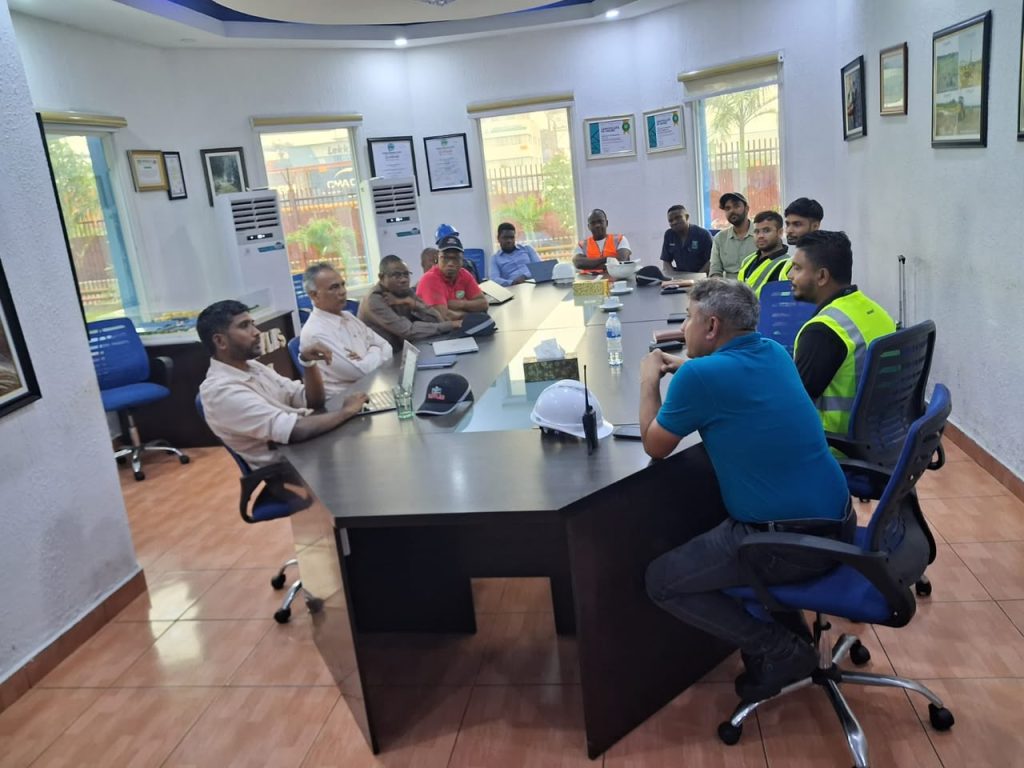
The Safety File: What Compliance Evidence Actually Looks Like
A safety file full of appointment letters and no technical assessment proves that duties were allocated, not that hazards were assessed. The clause-referenced audit report – with photographs, thermal images, measured values and a closed remediation register – is what actually demonstrates the duty was discharged. If your safety file consists mainly of signed appointment forms and generic policy documents with no site-specific measurement behind them, it won’t hold up to the reasonably-practicable test if it’s ever tested by an inspector, an insurer, or a court after an incident.
Are Health and Safety Audits a Legal Requirement in South Africa?
The Act doesn’t use the word “audit” as a defined, mandatory instrument in the way some jurisdictions’ regulations do. What it requires is that hazards are identified and risks are assessed – and for electrical installations, fire provision, and energised electrical work specifically, a documented, clause-referenced audit is the accepted and, in practice, the only credible way of producing that evidence.
So while no single clause says “you must commission an audit,” the underlying duties in the Act and its regulations are very difficult to discharge, and even harder to prove after an incident, without one.
How Singh Isotech Helps
Electrical Safety Audit
Evidences the Electrical Installation Regulations duty with a clause-referenced audit and thermographic survey.
Fire Safety Audit
Documented fire risk assessment and fire compliance certificate readiness.
Arc Flash Study
Evidences the PPE and safe-working duty where employees work near energised equipment.
Energy Audit
Not a legal duty – but the same measured discipline, applied to what your energy actually costs.
Key Sections of the OHS Act at a Glance
The Occupational Health and Safety Act 85 of 1993 is short, and most day-to-day compliance questions point back to a handful of sections. Use this list to find the duty that applies to your site, then build the evidence for it in your safety file.
- Section 8 – general duties of employers to their employees: a safe workplace, safe systems of work, information, instruction, training and supervision
- Section 9 – duties of employers to people who are not employees, such as contractors and visitors
- Section 13 – the duty to inform employees of hazards and how to work safely
- Section 16 – the chief executive officer is ultimately responsible, and duties can be assigned in writing under Section 16(2)
- Sections 17 and 19 – health and safety representatives and health and safety committees
- Section 24 – reporting of incidents to the Department of Employment and Labour
- Related audits – electrical compliance certificate readiness, fire safety audit and energy audit in South Africa
Frequently Asked Questions
What is the OHS Act?
The Occupational Health and Safety Act 85 of 1993 is South Africa’s primary workplace safety legislation. It places a general duty on employers to provide a working environment that is safe and without risk to health, so far as is reasonably practicable, and its regulations carry the technical detail for specific hazards such as electrical installations, fire and machinery.
What are an employer's main duties under the OHS Act?
Providing and maintaining safe plants and systems of work, identifying hazards and assessing risk, eliminating or mitigating hazards before relying on PPE, providing training and supervision, and ensuring the Act’s requirements are met by everyone on the premises.
Does the OHS Act require an electrical safety audit?
Not by that name specifically – but the Electrical Installation Regulations made under the Act require compliant installations and valid Certificates of Compliance, and a documented electrical safety audit is the practical evidence that this duty is being met on an ongoing basis, not just at the point a certificate was last issued.
What is a Section 16(2) appointment?
Section 16(2) allows the chief executive officer, who carries the ultimate compliance duty, to assign specific health and safety responsibilities in writing to a competent person under their control. It doesn’t remove the CEO’s overall accountability – it distributes operational responsibility to someone positioned to discharge it.
Who is responsible for electrical safety at leased premises?
Responsibility is typically split by lease agreement and by what each party controls – the landlord for base building infrastructure, the tenant for their own installation and equipment – but the Act’s general duty applies to whoever is the employer in respect of the work being done, so this needs to be confirmed against the specific lease rather than assumed.
Are health and safety audits a legal requirement in South Africa?
No single clause mandates an audit by name, but the Act’s hazard-identification and risk-assessment duties are, in practice, very difficult to evidence for electrical, fire and energised-work risk without a documented, clause-referenced audit – which is why audits are the standard way employers demonstrate the duty was discharged.
What must be reported to the Department of Employment and Labour?
Certain categories of workplace incidents carry a statutory reporting duty to the Department of Employment and Labour. The specific thresholds and timeframes are set in the Act and its regulations and are amended from time to time – confirm the current reporting requirement directly with the Department rather than relying on a general summary.
Who does the OHS Act apply to in South Africa?
The Act applies to employers and employees in most workplaces, and it also protects people who are affected by the work, such as contractors and visitors. Mines are covered by separate mining health and safety legislation.
How many health and safety representatives does the OHS Act require?
Section 17 requires an employer with more than 20 employees at a workplace to designate health and safety representatives. The number depends on the type of workplace and the size of the workforce under the regulations, so check the current General Administrative Regulations for your site.
Is ISO 45001 required by the OHS Act?
No. ISO 45001 is a voluntary international standard for occupational health and safety management systems, while the OHS Act is law. A system certified to ISO 45001 can help you organise your evidence, but it does not replace legal compliance with the Act and its regulations.
Do you offer health and safety consultant support for OHS Act compliance?
Yes. We support employers with electrical, fire and energy audits, arc flash studies and the safety file evidence the Act expects, for sites in Johannesburg, Pretoria, Durban and Cape Town.
Build the Evidence Your Safety File Is Missing
Electrical, fire and arc flash audits that produce clause-referenced, defensible evidence of a duty discharged.
Evidence the duty, don’t assert it
Electrical, fire and arc flash audits that produce clause-referenced, defensible compliance evidence.

